Cyclists frequently battle fogged lenses during rides, which can compromise safety and comfort across variable weather conditions. Many strategies and technologies developed for cycling anti-fog eyewear have direct relevance to gear in other sports, most notably the paintball mask category. This article explores which anti-fog insights from cycling can improve mask designs and what features riders should compare when choosing protective eye gear for year-round clarity.
Most cyclists have struggled with foggy glasses or goggles on cold mornings, damp climbs, or humid commutes where visibility is critical. The challenge of maintaining clear vision is not unique to cycling. Innovations such as the anti fog paintball mask are rooted in many of the same engineering problems and solutions, making cross-application highly relevant. For players choosing paintball goggles, the same principles of airflow and lens temperature management can directly shape what works in the field. Understanding how cycling anti-fog technology works can help paintball players and other athletes pick more effective protective eyewear, including a paintball mask with anti-fog features.
In This Article:
Why cycling eyewear fogs and what makes a difference
Lens fogging primarily results from warm, humid air meeting a cooler lens surface, causing condensation. Cyclists riding in winter weather, climbing hills, or pausing at red lights often experience rapid lens clouding, especially when face coverings or jacket collars direct moist air upward. Similar airflow challenges occur when an anti-fog mask for paintball seals closely around the face, creating universal problems for athletes in variable weather.
Key differences in eyewear performance come down to fit, ventilation, and materials. Cycling eyewear often uses wide vents and anti-fog coatings to counteract moisture buildup, helping maintain clear vision during both hard efforts and rest stops. These techniques, honed on the road and trail, also help explain why many paintball goggles now borrow cycling-style vent layouts and coating approaches to reduce condensation.
Translating cycling solutions to paintball mask engineering
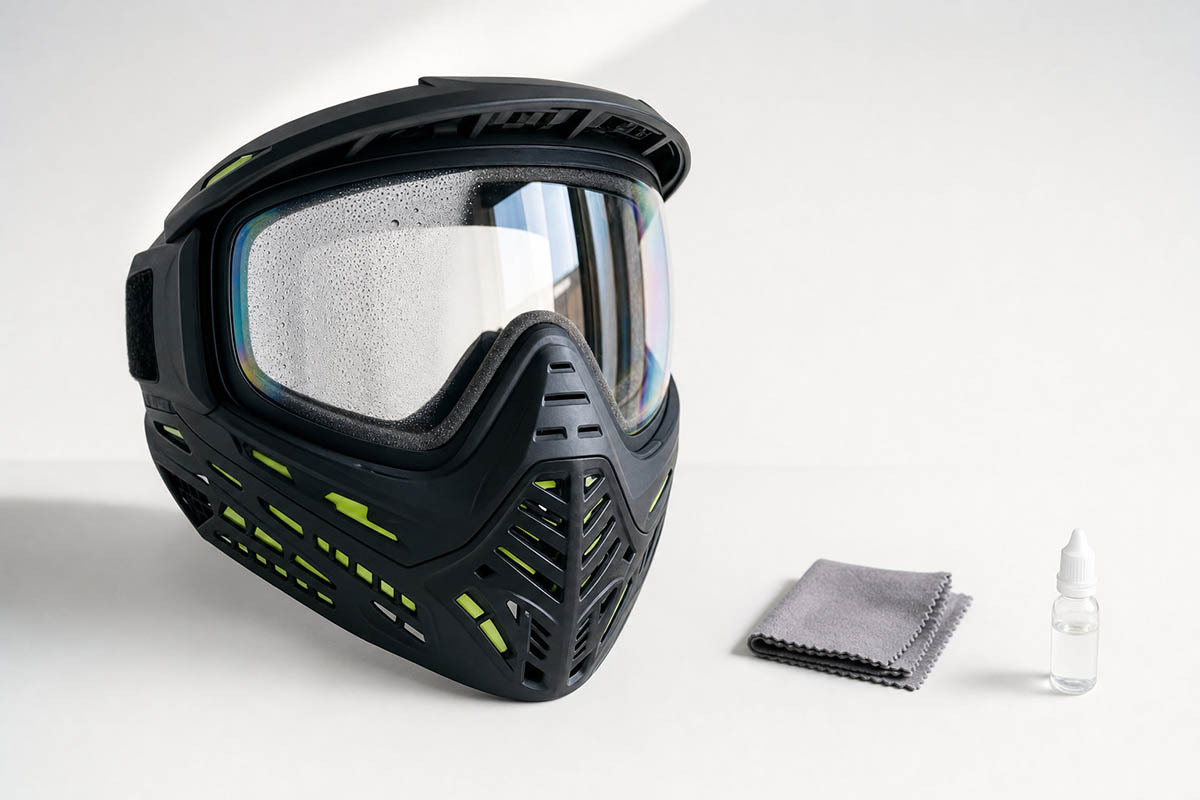
Paintball masks that feature anti-fog systems share core design strategies with high-performance cycling glasses. Dual-pane lenses with a small air gap reduce temperature gradients, making fog less likely during quick changes from exertion to rest. A thermal paintball lens is a common implementation of this idea, using layered construction to stabilize the inner surface against condensation. Hydrophilic coatings—first popularized in cycling gear—spread water across the lens, preventing droplet formation and visual distortion during intense play.
Ventilation is another crossover feature. Cyclists rely on carefully placed vents and adjustable airflow to keep lenses clear, which is mirrored in advanced paintball mask designs. A paintball mask with anti-fog performance still depends on balancing sealing and breathability, so fit does not sacrifice airflow. By borrowing these cycling approaches, paintball mask manufacturers can target fog-resistance with more precision, especially when the design pairs venting with a thermal paintball lens.
Comparing features for anti-fog effectiveness in both sports
When evaluating anti-fog paintball masks, cyclists’ comparison habits provide a framework. Look for dual-pane or thermal lenses, which manage temperature differences and resist condensation better than single layers. Many buyers treat a thermal paintball lens as the baseline for consistent clarity, then compare how vents are incorporated; they should allow for cooling without inviting water or excessive drafts, much as preferred in cycling eyewear for foul weather rides.
Another important aspect is comfort during extended wear—both cyclists and paintball players need gear that remains comfortable and secure for hours. Features such as replaceable face foam, compatibility with headgear, and robust anti-fog coatings can make the difference between reliable visibility and frustrating lens fog. If you are comparing paintball goggles across price tiers, it helps to prioritize models that manage sweat routes and maintain a stable seal without trapping moist air.
Maintaining anti-fog performance for all-weather use
Routine care has a major impact on the lasting effectiveness of anti-fog treatments. Whether for cycling glasses or an anti fog paintball mask, gentle cleaning with lens-safe products is crucial to preserve hydrophilic coatings. Avoid harsh wipes or abrasive cloths, as these can damage the very surface treatments designed to prevent fogging on the lens.
Regular checks for fit and seal, as well as timely replacement of inserts or foam, boost comfort and fog resistance. For an anti-fog mask for paintball, keeping vents unobstructed and foam dry between sessions reduces the moisture load that triggers fogging. Cyclists and paintball players alike benefit from developing maintenance habits so gear keeps performing, regardless of shifting seasons and unexpected weather. With these shared insights, a paintball mask with anti-fog design elements can meaningfully enhance the safety and enjoyment of users all year round.